Why Micronutrients Matter More Than Ever
Start your liquid journey with micronutrients
Micronutrients have shifted from a “nice-to-have” extra for crop nutrition programs to a critical driver of crop performance. Modern crop genetics increase yields, but they also have increased nutritional demands. Australian soils, stressed by years of intensive production, aren’t keeping up with these demands. The data clearly shows an increase in micronutrient deficiencies, especially in zinc, manganese and boron.
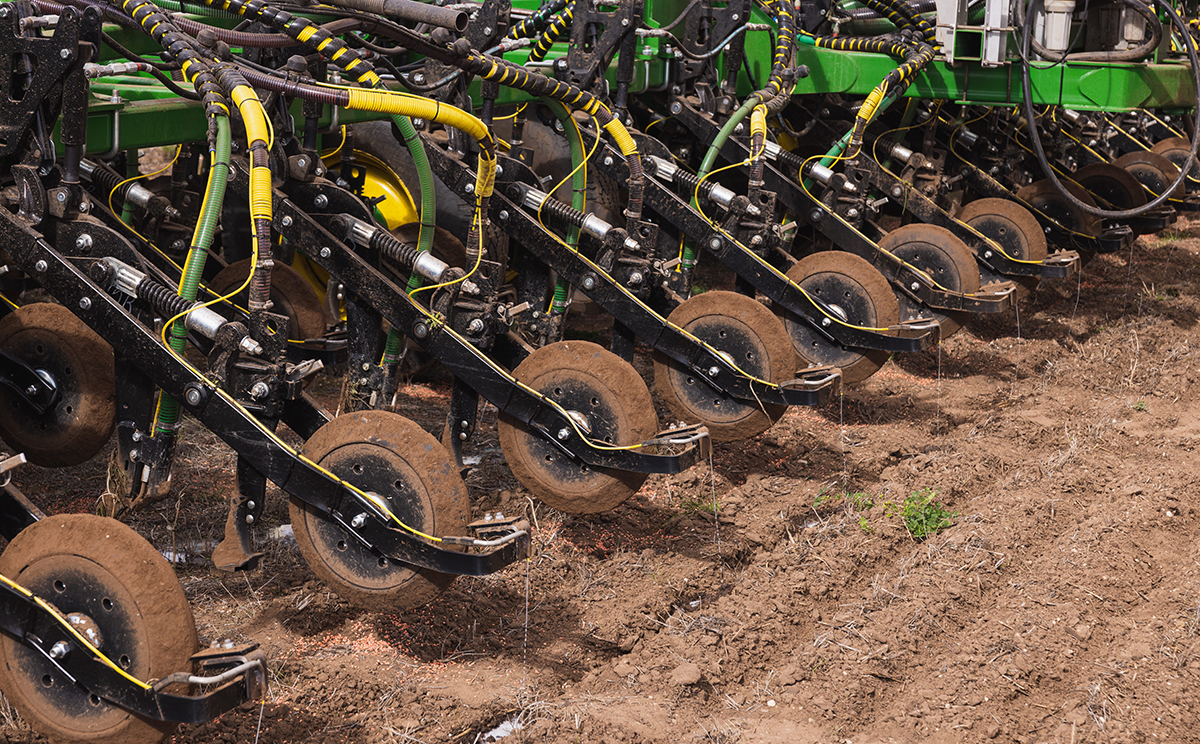
Fortunately, precision ag, in-furrow placement, and better formulations now allow growers to apply micronutrients exactly where and when crops need them. This makes small volumes incredibly efficient and increases return on investments. The precise application of micronutrients at seeding is especially efficient as they are placed and available for immediate uptake to support root development, stress tolerance, and early vigour.
In a world of extreme weather, tighter margins and sustainability pressures, micronutrients offer one of the most cost-effective ways to protect yield potential. They help growers address minor nutrient deficiencies before they become major problems, unlocking crop performance that NPK alone can’t achieve.
There are several reasons why in-furrow liquid injection makes micronutrients more effective.
Immediate uptake for stronger starts
Placing micronutrients right at the seed ensures early access during the most critical growth stages. This supports:
- Faster emergence
- Improved root development
- Better early vigour
- Higher nutrient-use efficiency
A small amount, placed exactly right, goes a very long way.
Targeted delivery eliminates the patchiness of granular applications
Traditional granular micronutrients often fail to distribute evenly, resulting in some plants thriving while others fall behind. In-furrow liquid delivery provides:
- Uniform distribution across every row
- Consistent, reliable nutrient availability
- Even crop establishment
This translates to more uniform maturity and higher yield potential.
Higher return on investment with lower volumes
Micronutrients in very small volumes make a big difference. That makes them an ideal entry point for growers exploring liquid delivery without committing to high-volume nitrogen applications.
Growers new to liquid applications gain:
- Lower infrastructure requirements
- Low cost-per-hectare
- High impact on yield and quality
More bang for your buck is an understatement when it comes to the ROI of liquid trace elements applied in-furrow at planting.
Enhanced stress tolerance
In a season of weather extremes, micronutrients help crops stay resilient. Zinc, manganese, boron and other trace elements support:
- Drought tolerance
- Disease resistance
- Stress recovery
- Efficient respiration and photosynthesis
- Improved hormonal balance
A well-nourished crop is more likely to sustain and recover from environmental stress and disease pressures.
A perfect fit for precision farming
In-furrow delivery aligns with modern precision tools, allowing growers to:
- Match rate to soil test data
- Sync with VR seeding maps
- Place nutrients exactly where roots will be
- Build a truly balanced fertility program
Micronutrients go from being nice-to-have optional nutritional boosts to essential tools in a precision system.

Insights from Yorke Peninsula grower John Davey
At Kalimar Ag on the Yorke Peninsula, John Davey and his sons took the leap to liquid. He strongly suggests that growers curious about getting started with liquids start with micronutrients.
The up-front cost is cheap for a great result. You only need to have a small liquid tank, and you can use an old spray cart. The product itself is also cheap, and you will notice a big difference in your crops.
Applying micronutrients after seeding means missing the key window for seedling uptake. By this time, seedlings have already germinated and are pulling trace elements from the soil. Applying at seeding means that nutrients are immediately available and not reliant on rainfall. It also avoids volatilisation losses common with urea spreading, where nitrogen can gas off before entering the soil.
We used to spray our trace elements out after seeding and it was already too late because the plant has started to use ZMC from the soil. By putting the trace elements out with the seed, the plant can start using it straight away.
John’s journey began with applications of 7L/ha of ZMC with 100L of water. After three years it was reduced to 5L/ha as soil levels improved.
For effective disease control, in-furrow application at seeding incorporates fungicide above and below the seed, and has virtually eliminated rhizoctonia in his paddocks.

Other growers, like Dustin Sparrow on the Eyre Peninsula, are likewise convinced that liquids are the key to efficiency. Applying micronutrients at tillering was too late to prevent deficiencies. Dustin says,
Now, with liquid injection at seeding, we get it all out up-front and it’s there ready to go when the crop needs it. Plus, we’re applying it right with the seed where it needs to be.

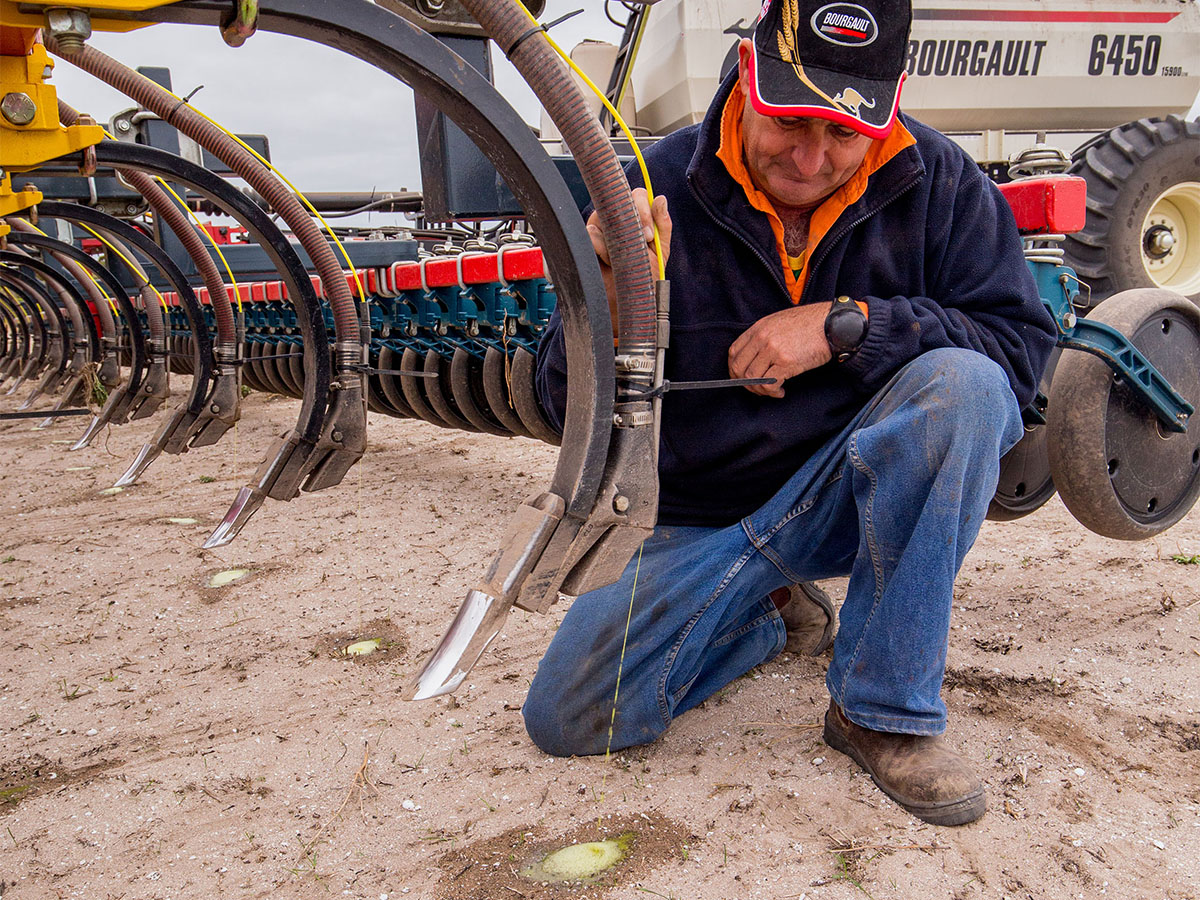
Michael is convinced that placing trace elements with the seed is the key. “It’s got to be right there with the seed,” he said. “The calcareous soil locks up a lot of the nutrient very quickly. It needs to be instantly available to the seed to be effective.”
More inputs at seeding for less cost, through a Liquid System, means more dollars back in my pocket.
LQS TOP TIP:
Trace elements can build up and leave deposits in your pipework over time. Protect flow accuracy by flushing with fresh water daily and performing regular deep cleans using a boom spray cleaner.
If you’re looking to step confidently into liquid delivery at seeding, Liquid Systems (SA) has you covered.
As a trusted leader in precision liquid injection, our systems deliver accuracy, reliability and seamless integration into your seeding setup.
Micronutrients, though required in tiny amounts, play crucial roles in plant growth, stress tolerance and early vigour. Applying them in-furrow at seeding ensures immediate, efficient uptake right where the plant needs it most. With minimal volume needed, micronutrients offer a simple, low-infrastructure entry point into liquid application — offering exceptional “bang for your buck” without the demands of high-rate nitrogen systems.