Liquid fertiliser at seeding – getting more from every pass
Yerritup Creek Farms uses targeted liquid application to put more nutrition where the crop needs it, while gaining greater flexibility across a demanding 10,000-hectare seeding program.
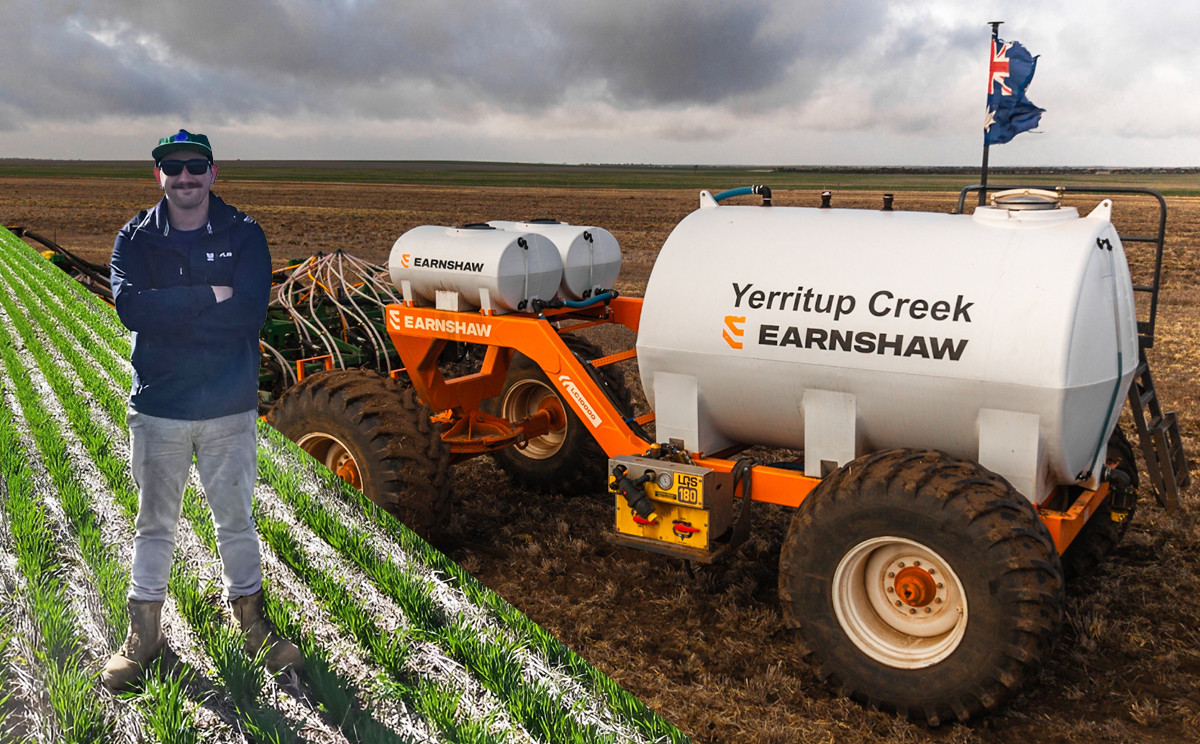
Manager Kirk Whiting is making every seeding pass count. Farming with his family around 100km west of Esperance, WA, Kirk crops 10,000 hectares of wheat, canola and barley across soils ranging from heavy clay to sandy gravel.
With conditions capable of changing quickly, making the most of the seeding window is critical. The farm uses two Liquid Systems LQS180s to apply a significant dose of nitrogen early, alongside trace elements and fungicides where the crop can access them quickly, has become an important part of the farm’s seeding strategy.
| ABOUT |
|---|
- WHO: Kirk Whiting, Yerritup Creek Farms
- LOCATION: 100km west of Esperance, WA
- CROP: 4,500ha wheat, 4,200ha canola and 1,400ha barley
- FARM SIZE: 10,000ha cropping
- INPUTS: Flexi-N, trace elements, fungicides, insecticides, and occasional humic acid
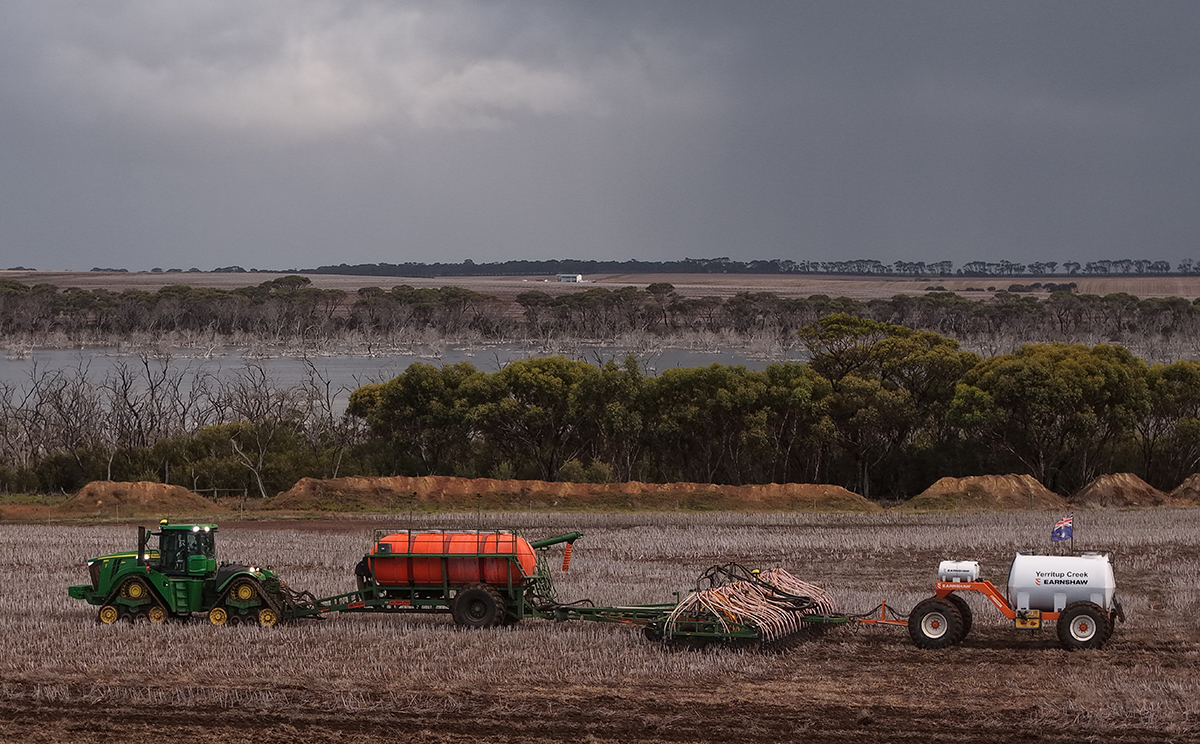
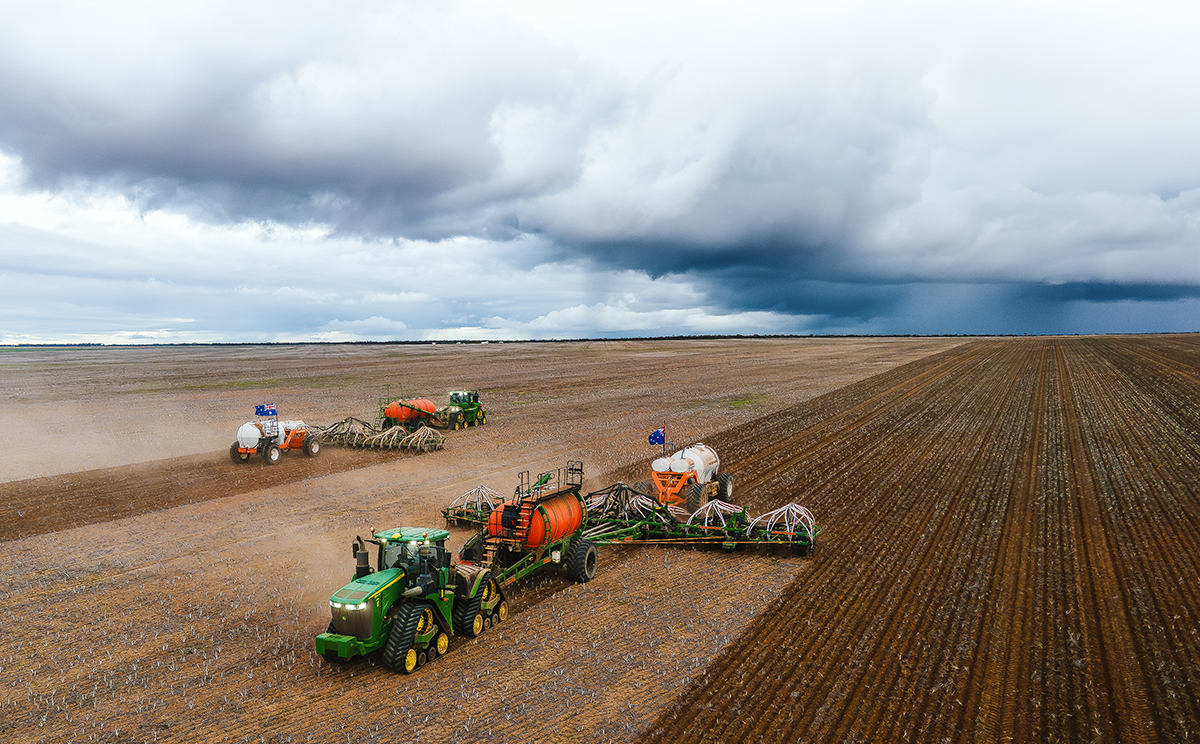
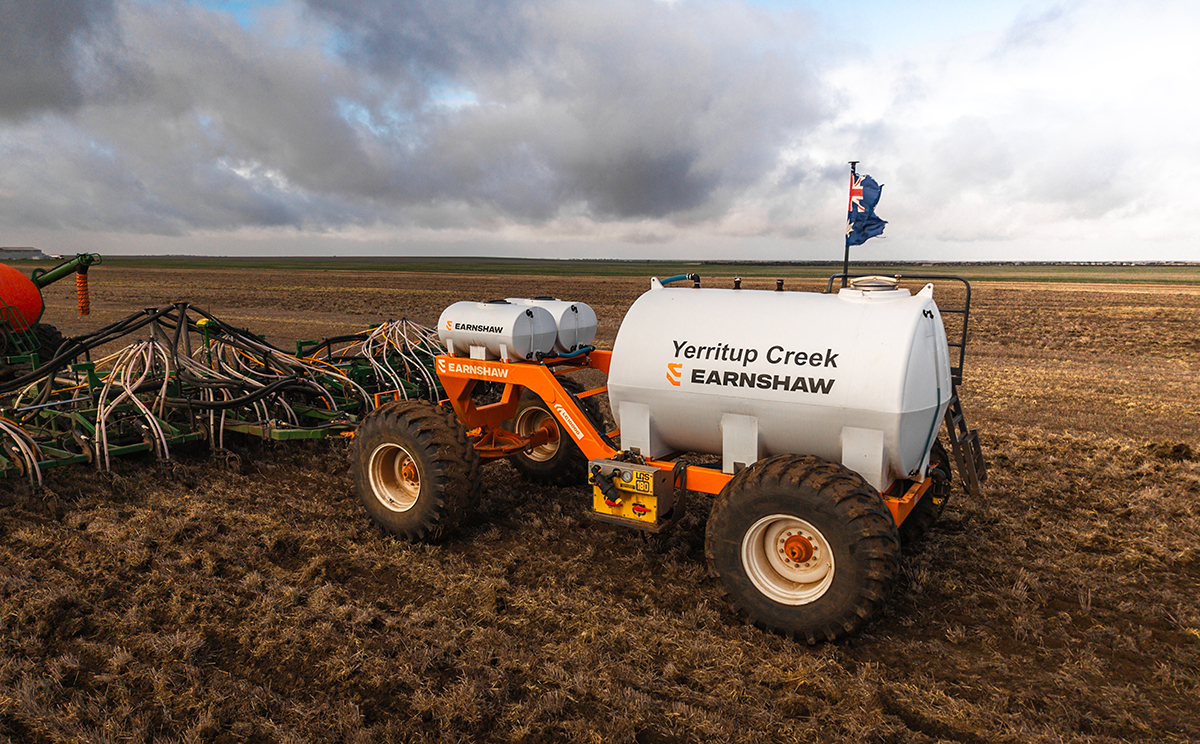
- EQUIPMENT: Liquid Systems (SA) L2 x LQS180 Modules & Stacker Distribution Kits, 2 x 18m DBS Air Seeders, 2 x 10,000L Earnshaw liquid carts and GreenStar rate controller
| KEY OUTCOMES |
|---|
- Eliminated manganese deficiency in cereal crops
- Upfront nitrogen with targeted placement
- Greater flexibility in timing of in-crop applications
- Simple, reliable operation across 24-hour seeding
- Improved operational efficiencies
Placement and timing matter
Yerritup Creek Farm had already moved towards liquid injection before fitting the LQS180s in 2025. While a previous system hadn’t delivered the performance Kirk wanted, Kirk remained convinced of the benefits of applying liquid at seeding.
A major driver is the farm’s climate. “We need to have a big dose of nitrogen upfront to the crop because things can get very wet very quickly,” Kirk says.
The farm typically applies 42–50 units of nitrogen at seeding, giving the crop a strong nutritional start while allowing the team to complete its first round of spraying before returning to spread additional nitrogen.
Previously, the farm used urea ahead of the seeder. In dry conditions, however, Kirk found that some of the nitrogen could end up in the inter-row rather than where the developing crop could access it.
“With a dry start, you hit moisture and get your crop up, but the crop’s not actually getting anywhere near the nitrogen in the inter-row.”
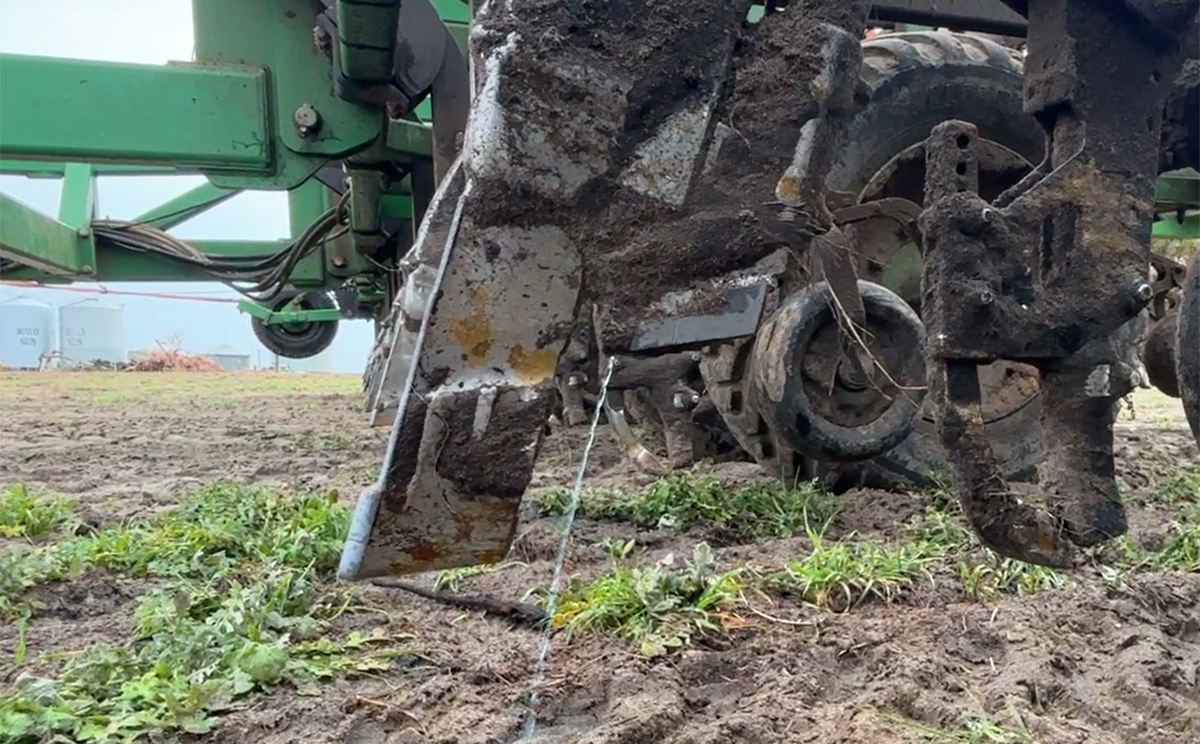
Kirk now deep-bands Flexi-N approximately 70mm below the seed using a GroundHog fertiliser boot and splitter boots, keeping the nitrogen close to the developing root zone while separating it from the seed.
“We’re finding zero toxicity or gassing happening.” says Kirk
As the team gained confidence with the system, application volumes increased from around 60–70 L/ha to 100–120 L/ha.
“We just found it a lot more efficient, running high volumes of Flexi-N at seeding time with the Liquid System.”
Building nutrition into the seeding pass
Nitrogen isn’t the only input going through the LQS180s. Yerritup Creek Farm also applies trace elements and fungicides, and has trialled humic acid on heavier country.
One of the clearest agronomic benefits has been in the cereal program, where the farm previously experienced significant manganese deficiencies.
Kirk now applies high rates of trace elements at seeding, including up to 5L/ha of ZMC 242.
We just don’t get manganese deficiencies anymore. It’s been great. It’s just way more effective under the roots, ready to go for instant uptake.
For Kirk, the benefit goes beyond correcting the deficiency. With manganese already applied, the farm can make in-crop spray decisions around the crop and conditions, rather than returning specifically to address a nutrient deficiency.
We’re not rushing out there early for a manganese pass. It’s already locked and loaded in the soil.
It gives the team greater flexibility with both workload and application timing.
An unplanned comparison
During the 2026 season, with nitrogen availability tight, the team switched Flexi-N off for a section of the seeding pass and later applied 42 units in-crop.
The area was canola following heavy barley stubble and averaged around 3t/ha.
Kirk observed a 0.5t/ha yield difference between the area that received Flexi-N at seeding and the area where it was switched off.
He attributes the difference to the dry start, stubble tie-up and the advantage of having nitrogen positioned beneath the crop rather than relying on subsequent rainfall to move it into the root zone.
“If you haven’t got rain washing it in, you’re sort of relying on the rain to get it to the plant. Whereas down the tube, it’s targeted and readily available under the plant.”
Designed for 24-hour seeding
Yerritup Creek Farms run two 18m air seeders around the clock, with four operators working across the machines.
With multiple staff operating the equipment, simplicity and reliability are important. According to Kirk, the Liquid System requires very little attention from operators.
They don’t even think about it. It’s that straightforward and bulletproof. It’s just running in the background perfectly all the time.
The LQS180s are integrated with John Deere GreenStar rate controllers, keeping the Liquid System streamlined with the rest of the seeding equipment.
The team also uses the LQS180’s flushing feature and one of the liquid cart’s freshwater tanks to flush the lines after use, helping keep residual Flexi-N off the seeding equipment and reducing the risk of corrosion.
Efficiency beyond fertiliser
Kirk found another way to use his liquid infrastructure to save time.
The team uses the other freshwater tank on the liquid cart as a chemical holding tank to supply a separate fence-line spray system. A separate 12V pump feeds a line to the end of the wing of the seeding bar, allowing the operator to treat the fence line as the seeder works around the paddock.
This clever approach has eliminated dedicated in-crop fence-line spraying — a job Kirk estimates previously took around six weeks.
Support that keeps the system moving
For Kirk, choosing Liquid Systems wasn’t just about the equipment. Service, follow-up and dealer support have been an important part of the experience.
Having previously experienced pump issues with another system, the reliability of the LQS180s was a key consideration. The support network has also given the farm confidence that parts and assistance are available when needed.
Asked if he would recommend Liquid Systems to other growers, Kirk is unequivocal.
“Absolutely. The service and the follow-up communication from them have been great.”
With the farm preparing to move to a John Deere C650 air cart setup, section control is the next planned upgrade to the Liquid System.
For Yerritup Creek Farms, liquid injection has become an important part of making every seeding pass count delivering nitrogen and micronutrients where they are needed, reducing the need for additional passes and giving the farm greater flexibility throughout the season.
As Kirk puts it, “Simplicity is the biggest thing.”